Tag: AI tools

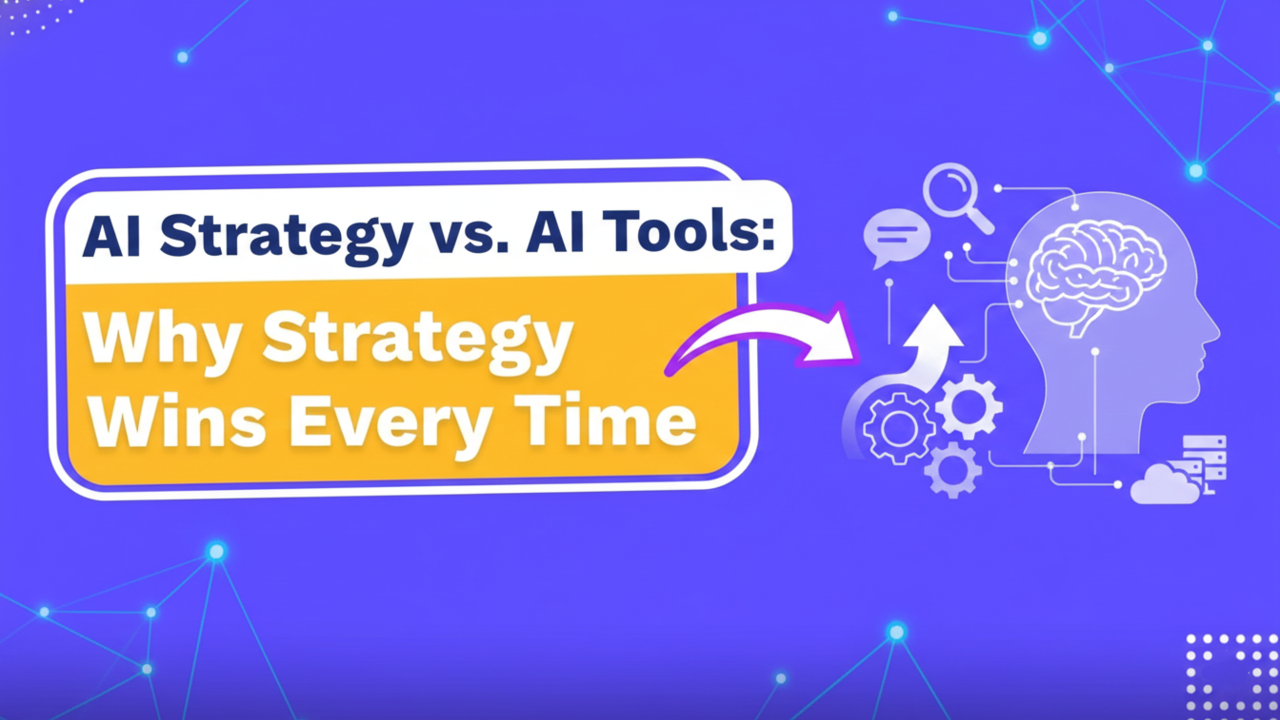
  • AI Strategy vs AI Tools: Why Strategy Matters More

    AI Strategy vs AI Tools: Why Strategy Matters More

    AI isn’t just some dream anymore. But here’s what a lot of companies skip, Do we actually know what we’re doing with AI? In the rush to try every shiny new tool, people forget to stop and think about the bigger picture.

    And honestly, that’s where most teams go wrong. It’s not about who has the fanciest chatbot or the most complex analytics dashboard. The real difference comes down to one thing, strategy. Tools on their own don’t change much. You need direction.

    The Trap: Chasing Tools, Not Solutions

    AI tools look impressive. Chatbots, automation bots, fancy prediction, they all promise speed and efficiency. So it’s no surprise companies use them on, either to keep up with the competition or just to look modern.

    The screen shows data related to AI and finance, both marked with wrong suggesting a current technological approaches.

    But here’s the catch, When you skip strategy, your AI tools tend to:

    • Fix problems you don’t actually have
    • Create messy, disconnected workflows
    • Fail when you try to scale
    • Burn money instead of making it

    You end up with a collection of tech experiments, not real business wins.

    What It Really Means to Have an AI Strategy

    Don’t confuse strategy with picking the right software. A real AI strategy is about locking AI into your actual business goals.

    You start asking the right questions:

    • What problem do we need to solve?
    • Where can AI actually make a difference, we can measure?
    • How does AI fit into what we already do?
    • Who’s in charge of keeping AI on track?
    • How do we keep our data clean and secure?

    When you tackle these first, AI becomes something you actually use, not just something you have.

    Why Strategy Comes First

    An office setting with robots and people working at computers, featuring a diagram highlighting that strategy and tools.

    AI tools are temporary. Strategy sticks around. If you have a clear strategy, you can keep moving forward, no matter what new tech pops up.

    With strategy leading the way:

    • You pick tools that actually help your teams, not slow them down
    • AI push your long-term goals, not just trends
    • Everyone knows what AI is for and how it fits
    • Decisions get smarter and more consistent

    Put simply, strategy turns AI from a cost center into a growth engine.

    The Real Foundations: Data and People

    Even the most powerful tools won’t save you if your foundation is shaky. A good strategy forces you to face two make-or-break factors: data and people.

    • Data: Your AI is only as good as the data you feed it. Clean, organized, trustworthy data isn’t optional.
    • People: New tech means change. Teams need to understand what’s happening, get training, and feel confident. With a smart strategy, AI becomes something people actually want to use, not something they don’t use.

    How to Actually Get Started with AI

    Forget about “Which tool should we buy?” Ask, “Where does AI make sense for us?”

    A smarter path looks like this:

    • Spot the best opportunities for AI, places where it can really help
    • Run small , not giant
    • Measure everything. Did it actually work? Prove it.
    • Only scale up what delivers results
    The robot is using a laptop, which includes AI implementation and measure everything.

    You cut risk, keep things practical, and set yourself up for long-term wins.

    Strategy Turns AI into a Advantage

    Anyone can buy AI tools. Not everyone uses them wisely.

    What sets strong businesses apart is how they use AI, whether it actually helps decisions, delights customers, and smooths out operations. When strategy leads, AI isn’t just another feature. It’s a serious growth driver.

    One Last Thing

    AI tools matter, but they’re just one part of the story. Without strategy, even the flashiest tech falls flat. The companies that take time to define what they want from AI, tie it to real goals, and get their people and data ready.

    A futuristic city with a digital interface showing human connected to Strategy and Tools.

    At ScidaForest, we’re big believers in purpose-built AI. Start with strategy, then pick the right tools. That’s how you build digital solutions that actually last and help you grow.

  • 10 Different Ways You Can Use AI Today

    10 Different Ways You Can Use AI Today

    AI isn’t just for tech giants or researchers anymore. It’s everywhere, helping people work smarter, save time, and make better choices. Whether you’re running a small startup or a huge company, you can find ways to use AI right now that actually make a difference.

    Let’s look at some of the best ways you can put AI to work today.

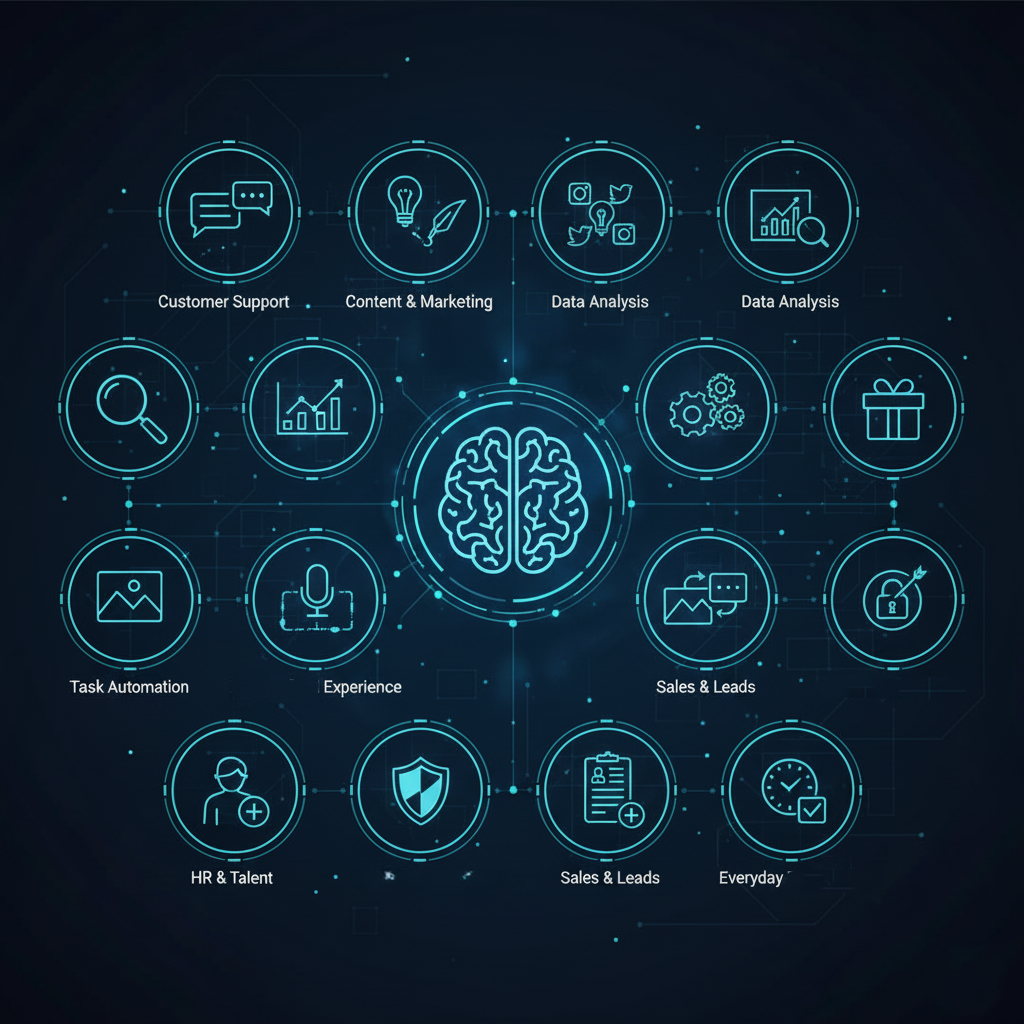
    AI applications in business including customer support, marketing, data analysis, automation, personalization, sales, cybersecurity, HR, and productivity tools.

    1. Customer Support and Service

    You’ve probably chatted with an AI-powered bot without even realizing it. Chatbots and virtual assistants answer questions, no waiting around for a human reply. For companies, that means faster responses and lower costs. For customers, it means getting answers, even late at night.

    2. Content Creation and Marketing

    AI is great at writing drafts, summarizing content, and fine-tuning marketing campaigns. Teams use it for outlines, social media posts, email drafts, even ad copy. It won’t replace your creativity, but it takes care of the heavy work, so you can focus on the big ideas, and your brand’s voice.

    3. Data Analysis and Insights

    AI spotting patterns you’d never see on your own. Companies use it to understand what customers want, trends, track performance, and make decisions by real numbers. With AI, don’t just guess, they act fast and with more confidence.

    4. Automating Repetitive Tasks

    To be honest, some tasks are just boring. AI can handle data entry, scheduling, generating reports, processing invoices, sorting documents. When you handover the repetitive stuff to AI, your team suddenly has more time for the work that matters, solving problems, innovation actually moving things forward.

    5. Personalized Customer Experiences

    AI makes it easy to personalize things. Think product recommendations, tailored emails, special offers, the kind of stuff that makes customers feel like you get them. Personalization keeps people engaged, builds trust, and boosts sales.

    6. Sales and Lead Management

    Sales teams use AI to spot leads, predict what customers want, and suggest next moves. Through interactions, highlights the best opportunities, and helps teams focus on leads that are actually likely to buy. The result? A smoother sales and better results.

    7. Image, Voice, and Language Processing

    AI isn’t just about numbers or text. It can recognize images, understand speech, and translate languages in real time. You see this in voice assistants, transcription tools, language translation, document scanning, even visual search. These tools make communication faster and easier for everyone.

    8. Cybersecurity and Risk Management

    AI keeps a eye on systems, constantly looking for anything unusual. It spots threats, flags fraud, and reacts quicker than any manual process ever could. That means better protection for your data, your business, and your customers.

    9. HR and Talent Management

    AI is making a difference in hiring and HR too. It screens resumes, matches candidates to open roles, tracks employee engagement, and helps with onboarding. Used right, AI makes HR more efficient, so teams can focus on what really matters like growth.

    10. Everyday Productivity

    From smart replies in your inbox and quick meeting summaries to reminders and research help everything. AI tools are basically your digital sidekick, handling the little things so you can do more.

    Conclusion

    AI isn’t some dream. It’s here, and it’s helping people right now. You don’t need a giant budget or a bunch of tech experts to get started. Just set clear goals, try out a few practical tools, and learn as you go.

    AI is used everywhere. AI-driven technology enabling data connectivity, automation, and digital transformation in business.

    Whether you’re looking to boost customer service, automate annoying tasks, or get more out of your data, AI has something for you. The people and companies are jumping now. They’ll be ready for whatever comes next.